
Running a Sex Offender Check in Jefferson County
The Texas Public Sex Offender Registry is the main official channel for Jefferson County. DPS manages the statewide system, while municipal police departments and the county authority register and verify people within their areas. The registry is free. It is separate from the DPS conviction name search, Jefferson County court files, and the Sheriff's current-inmate cards. A registry result answers a narrow question: whether public Chapter 62 registration information matches the search.
Start with the details that are least likely to change. A full or partial name may locate a known person. County, city, ZIP, address, and radius tools are better for community awareness around a place. Beaumont, Port Arthur, and Nederland residents should use the city filter when useful, while a Jefferson County filter can include results from across the county. If a result seems relevant, compare aliases, physical descriptors, photo date, and offense facts before drawing any conclusion.
Jefferson County Sex Offender Authority
Who handles a registration depends on residence. Under the DPS program description, a person who lives within an incorporated municipality registers with that city's local law-enforcement authority. Someone living outside a municipality registers with the county authority. That split means a Beaumont address generally points to Beaumont police, a Port Arthur address to Port Arthur police, and an unincorporated Jefferson County location to the Sheriff's Office.
Local authorities receive changes, carry out required verification, and transmit registration data to DPS. The public page is therefore a statewide display of locally supplied facts, not an independent field investigation by DPS. Verification and change-reporting dates vary with the person's Chapter 62 status. When an address or compliance label appears wrong, report it to the registering police agency or county authority. Do not approach the person shown in the result.
The Sheriff's official OCV mobile hub also promotes a sex-offender feature beside inmate search, most wanted, tips, news, and records requests. Treat that route as convenient access, not a separate Jefferson County registry. The official materials reviewed do not establish an app-only database or proximity-alert service, so the DPS search remains the source to verify.
Note: A city boundary can determine the registering office even when the mailing address still says Jefferson County.
Searching the Texas Public Sex Offender Registry
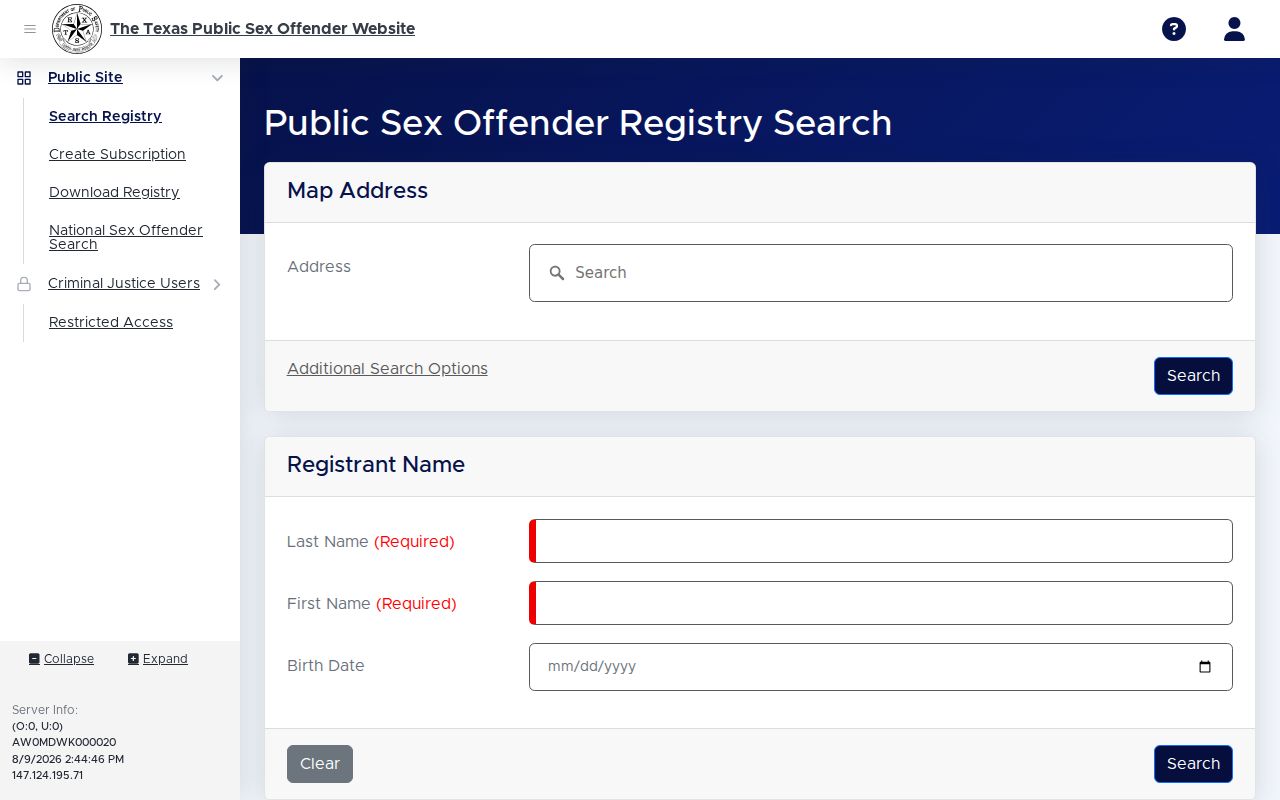
The DPS registry search interface shows the exact official starting point without centering a private person's record. Its form supports both name and place-based research for Jefferson County.
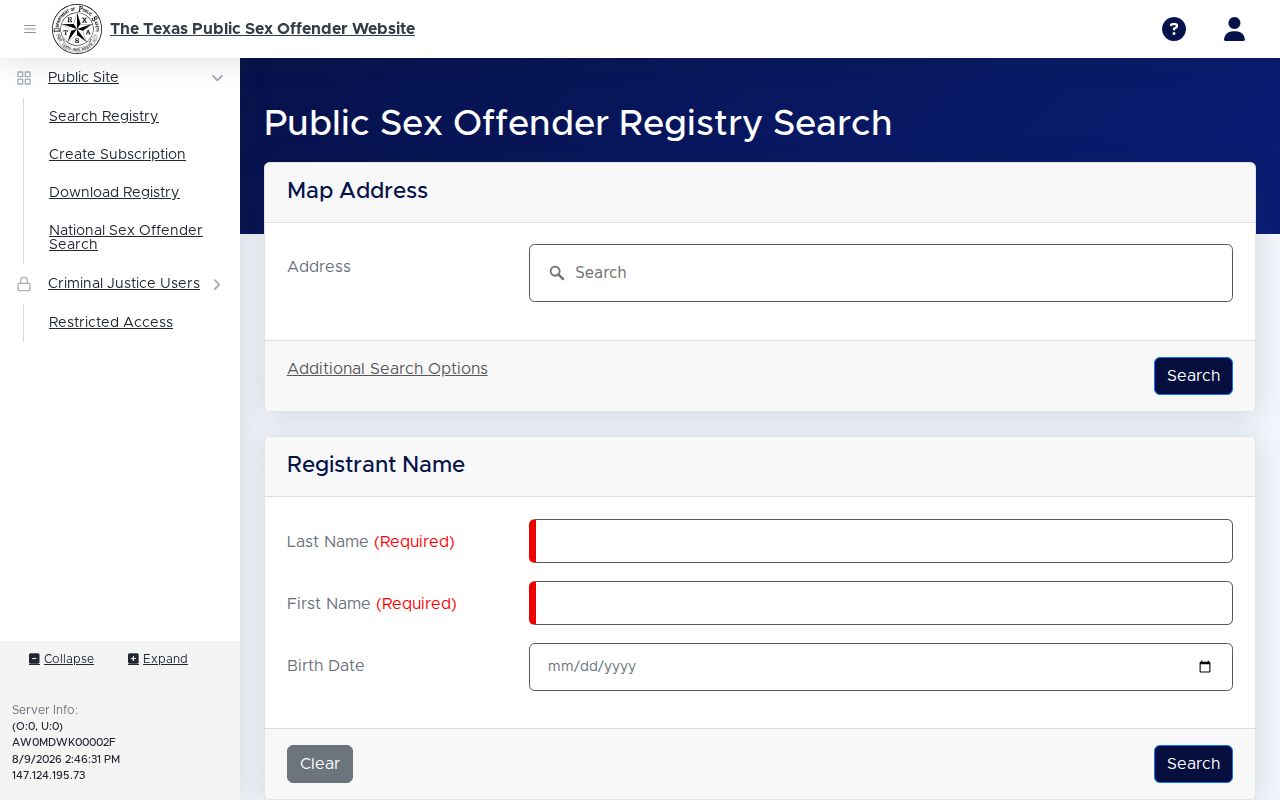
The form's separate geographic fields help avoid treating a name match as a location match. Use a broad county search first, then narrow only when the results are too wide.
- Open the DPS registry and read its conditions of use before entering search terms.
- Choose a name search or enter an address, city, ZIP code, county, and radius where the selected mode calls for them.
- Review the list or map and compare more than one identifier. Similar names alone are not enough.
- Open a likely profile and check the photo date, address status, offense, jurisdiction, and registration details.
| Field Label | Type | Required | Notes |
|---|---|---|---|
| Last Name | Text | Depends on mode | Used for a name search; live partial-name behavior should be checked |
| First Name | Text | No or mode-based | Narrows a name search |
| Address | Text | Address mode | Supplies the location for map or radius results |
| City | Text or select | Mode-based | Use the Jefferson County city when known |
| County | Select | No or mode-based | Select Jefferson for countywide results |
| ZIP Code | Text | No | Narrows geographic results |
| Radius | Select | Address mode | Live distance choices appear in the active interface |
| Map or List | View tabs | Not applicable | Changes how geographic results appear |
Jefferson County Registry and NSOPW
The Texas search should be followed by the National Sex Offender Public Website when a person may have lived in another state or when a location sits near a state line. NSOPW is a U.S. Department of Justice search across participating jurisdictions. It does not replace the Texas record or create a new Jefferson County profile.
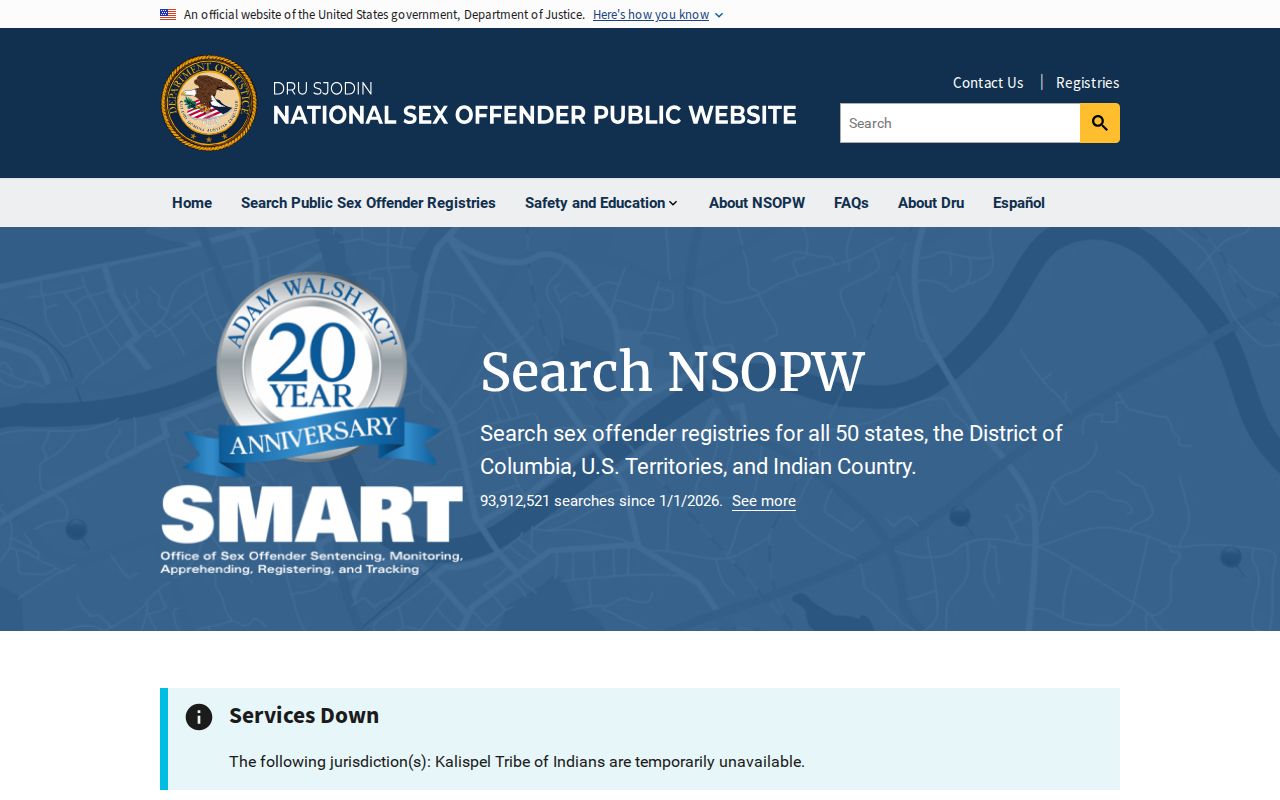
For Jefferson County readers, the national layer is especially useful when a search involves movement across the nearby Louisiana border. A difference between the two systems calls for a closer look at the source jurisdiction, update timing, and status, not a guess about which result is correct.
What a Registry Profile Shows
A public Texas profile groups identifying traits, the reported address, registration status, and the qualifying offense. The DPS profile layout also makes clear that the record has dated fields rather than a promise of real-time movement.
Read the photograph date and address type beside the status fields. A geographic location may appear in place of a standard street address, and the offense jurisdiction may be outside Jefferson County.
| Name and Aliases | Reported names and aliases, plus a DPS or state registry identifier where shown |
|---|---|
| Photo and Description | Current supplied photograph and date, sex, race, age or birth date, height, weight, hair, eyes, scars, marks, and tattoos |
| Registered Location | Street address or detailed geographic location, together with address type or status |
| Offense Record | Reportable offense, statute, adjudication or conviction date, court jurisdiction, victim age category, and sentence |
| Public Status | Registration or compliance status, verification requirement, and risk level when assigned |
| Other Public Fields | School or higher-education and vehicle details when Chapter 62 requires and permits disclosure |
Jefferson County Registry Withheld Details
A public registry entry is not the full file kept by DPS or the registering agency. Texas excludes Social Security numbers, driver's-license numbers, phone numbers, online identifiers, employer names and contact details, additional information required only for DPS administration, and facts that identify a victim. Juvenile information also stays out of the public search when a court has ordered it nonpublic.
Those omissions protect people whose details do not serve the public-notice purpose. They also set a firm limit on what a Jefferson County result can establish. A missing employer field, phone number, or victim fact is not a database failure. It is information the public profile is not designed to disclose. Court records may have separate access rules, and a registry check should not be treated as a substitute for the underlying case judgment.
Registration Requirements and Levels in Texas
Texas does not reduce public registration duration to the federal Tier I, II, and III labels. Code of Criminal Procedure Article 62.101 generally assigns an adult either a ten-year duty measured from a statutory endpoint or a lifetime duty, based on the reportable offense and repeat-event rules. A public risk level, when assigned, does not by itself set the term.
| Texas Category | General Duration | Public and Verification Note |
|---|---|---|
| Adult lifetime categories | Life | Includes sexually violent and other Article 62.101(a) categories; verification can vary by offense or status |
| Other adult reportable events | Until the tenth anniversary after the later statutory release, discharge, or dismissal point | The profile remains public while the duty lasts unless law or an order restricts it |
| Juvenile adjudication | Generally ten years after disposition or completion, whichever is later | A juvenile court may make information nonpublic when the law allows |
| Extrajurisdictional registration | The foreign, federal, UCMJ, or Texas period Article 62.101 applies | DPS and the local authority determine the duty |
Removal is not based on a reader's view of age, risk, or time passed. Article 62.251 and other Chapter 62 provisions control when DPS removes information. Questions about a specific duty require the official record and legal advice, not a home-made count from the conviction date.
Jefferson County High-Risk Registry Notice
The DPS registration program describes postcard notification when a high-risk registrant or a civilly committed sexually violent predator moves into a community. Local authorities also notify schools where Chapter 62 calls for it. A mailed notice is a focused statutory channel. It should not be read as a complete list of all registrants nearby.
Use the live registry for the current public view, because a person can move, an address status can change, and information can be removed when a legal duty ends. Jefferson County residents who receive a postcard can compare its identifiers with the DPS profile. Any conflict should go to the registering authority. Public notice supports calm safety planning, not direct action against a listed person or household.
Report Jefferson County Registry Noncompliance
An address that looks stale, a compliance label that conflicts with known facts, or other apparent noncompliance should be reported rather than investigated by a member of the public. Save the public profile link, note the field that appears wrong, and contact the police department that registers the municipal resident. For an unincorporated Jefferson County location, contact the county authority. The DPS registry FAQ is the official statewide channel for common data and duty questions.
Do not contact the person, enter private property, publish extra personal details, or try to confirm an address in person. The registering authority can compare the report with nonpublic verification records and decide what action is proper. If the concern is an immediate threat, use emergency services. A routine data discrepancy belongs with the local registration unit or DPS.
Note: Report the exact public field and profile link so the authority can review the same Jefferson County entry.
Lawful Use and Community Notification
Registry information exists for public protection and informed safety choices. Chapter 62 makes most registration information public while withholding victim-identifying and specified personal data. That access does not authorize threats, harassment, intimidation, trespass, or vigilantism. The safest use is to review official details, discuss age-appropriate safety steps with family, and send compliance concerns to law enforcement.
A Jefferson County registry result can also be incomplete or changed after it was viewed. Confirm the current profile with DPS and the appropriate registering authority before relying on it. Never infer new criminal conduct from the mere existence of a registration duty.